The world’s most glamorous red carpet just became the biggest showcase for Indian artisan craftsmanship — and we’re here for every stitch of it.
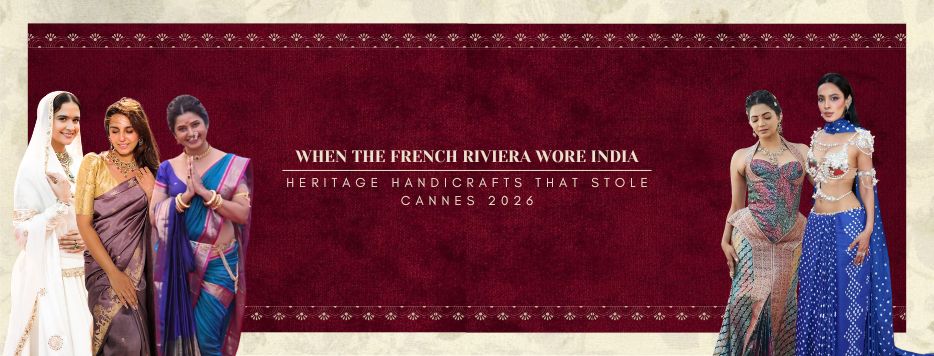
The Cannes Film Festival has always been fashion’s most theatrical stage. But Cannes 2026 did something extraordinary: it turned the French Riviera into a runway for India’s most precious heritage textiles, handcrafted embroidery, and artisanal jewellery — centuries-old crafts worn not as nostalgia, but as a bold, global statement. From the Ghats of Banaras to the salt flats of Kutch, India’s handicraft legacy arrived in Cannes not as a reference — but as the main event.
If you’ve ever wondered whether handwoven Indian fabrics, zardozi embroidery, or block-print textiles have a place on the world stage, Cannes 2026 answered with a thunderous yes.
The Banarasi Moment That Stopped the Internet
Huma Qureshi’s final Cannes 2026 appearance may have been the most quietly powerful fashion statement of the entire festival. She stepped onto the red carpet in a richly woven Banarasi saree by Shanti Banaras — a label rooted in the living tradition of Varanasi’s loom masters. The saree’s gold brocade featured palm tree motifs, a poetic nod to the French Riviera’s landscape woven into an Indian heritage craft.
She paired the look with Polki jewellery and accessories by Kavya Potluri — a complete celebration of Indian artisanal work from fabric to finish. This is exactly what heritage luxury fashion looks like: not mass-produced, not imitated, but deeply crafted.
Shop the craft: Explore our curated edit of Banarasi sarees and handwoven silk at Heritage Bazaar — pieces that carry the same soul.
Ajrakh from Kutch to Cannes: Fashion With a Conscience
Fashion influencer Ishita Mangal made her Cannes debut in something that spoke far louder than couture — a handcrafted Ajrakh look from Kutch by Geroo Jaipur. Ajrakh, one of India’s oldest block-printing traditions practised by artisans in the Rann of Kutch, is more than a textile: it is a living language of geometry, natural dyes, and generational skill.
By choosing Ajrakh for the global red carpet, Ishita reframed the conversation entirely. Handloom fashion and artisan-made clothing aren’t regional or niche — they’re world-class. They’re exactly what discerning global audiences are beginning to seek out: craft with a story, beauty with a conscience.
At Heritage Bazaar, we’ve long believed that sustainable Indian textiles and block-print fabrics deserve this spotlight. Cannes 2026 just proved us right.
Zardozi, Mirror Work & 300 Hours of Hand Crochet
Kalpana Shukla, Miss Universe UK 2023 runner-up, arrived at Cannes in a custom gown that translated two of India’s most celebrated handicraft techniques — zardozi embroidery and mirror work — into high-octane red carpet glamour. These are crafts with roots stretching back to the Mughal era, still practised by skilled artisans in ateliers across Lucknow and Rajasthan.
Meanwhile, Masoom Minawala — making her seventh Cannes appearance — used the platform to champion emerging Indian talent. She wore a custom black gown by 24-year-old designer Anushka Sanghvi, brought to life through over 300 hours of hand crochet by women artisans. For the red carpet, she turned to Amit Aggarwal, whose architectural creation drew inspiration from traditional Patola weaving — a double-ikat silk tradition from Gujarat that can take months to produce a single saree length.
These aren’t just clothes. They are testaments to the extraordinary skill of Indian handicraft artisans — the real heroes behind every Cannes moment.
From Banjara Kasuti to Kundan: The Artisan Roll Call
The heritage story at Cannes 2026 didn’t stop at a single look or a single craft. Digital creator Disha Madan attended the festival in a custom gown crafted from two vintage handwoven silk sarees, featuring Banjara Kasuti embroidery inspired by South Indian temple architecture — over 2,500 hours of handwork distilled into one red carpet moment.
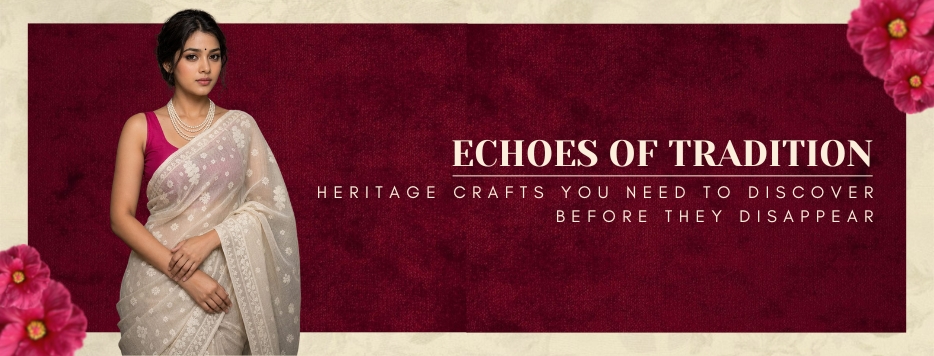
Creator Niharika Jain wore a hand-painted metal lotus-shaped corset alongside headgear hand-woven with over 1,000 genuine Kundan stones. And actress Urvashi Rautela stepped out in elegant white Chikankari — the delicate shadow-work embroidery that originated in Lucknow’s royal courts — paired with a gold bejewelled blouse.
Each craft, each artisan, each hour of handwork — now seen by millions across the world.
Why This Moment Matters for Indian Handicrafts
Cannes 2026 wasn’t just a fashion spectacle. It was a cultural inflection point. In a world saturated with fast fashion and algorithm-driven trends, India’s handloom heritage, artisanal embroidery, and traditional jewellery-making stood tall as the ultimate luxury — one that cannot be replicated by machines or mass production.
This is the philosophy at the heart of Heritage Bazaar. Every handcrafted saree, every piece of artisan jewellery, every block-printed fabric in our collection carries the fingerprints of skilled makers — weavers in Varanasi, block-printers in Kutch, embroiderers in Lucknow. When you shop Indian handicrafts, you don’t just acquire a beautiful object. You become part of a living tradition.
Bring Cannes Home
The red carpet has spoken. Heritage-inspired fashion isn’t a trend — it is the future of conscious, meaningful style. Whether it’s the timeless drape of a Banarasi silk saree, the graphic beauty of Ajrakh block prints, the delicate intricacy of Chikankari kurtas, or the royal shimmer of Zardozi embroidered lehengas — these crafts are having their global moment, and they deserve a permanent place in your wardrobe.
Explore Heritage Bazaar’s collection of handwoven sarees, traditional Indian embroidery, artisan jewellery, and heritage textiles — curated directly from India’s master craftspeople to your doorstep.
Because real luxury isn’t manufactured. It’s made by hand.